Fire & Gas Safety Advice for Tenants
This page explains how to stay safe in your property, including fire safety, gas safety and carbon monoxide risks. It outlines what to look out for, how to reduce risks, and what to do in an emergency.
- Test smoke alarms regularly
- Know how to turn off gas and electricity
- Keep escape routes clear
- Report safety issues immediately
Fire and gas safety are critical in any property. Understanding how to identify risks and respond quickly can help prevent serious incidents and keep you and others safe.
Before reporting an issue, please review the guidance below. If you believe there is an immediate risk, such as a gas leak or fire hazard, take appropriate action straight away and contact emergency services if required.
Identify the Issue
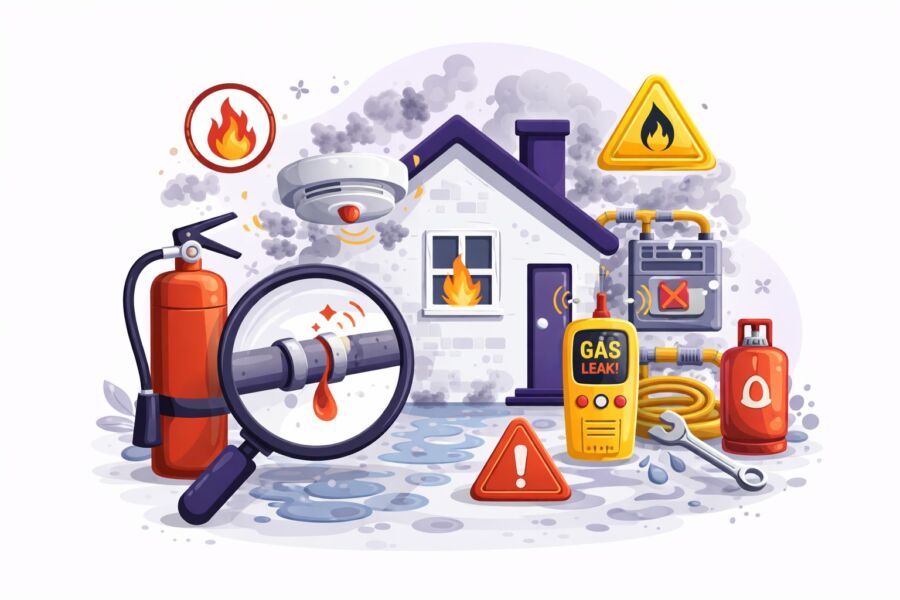
Fire and gas risks may not always be obvious. Warning signs can include faulty smoke alarms, the smell of gas, unusual appliance behaviour, or signs of overheating, burning or damage to electrical equipment.
What You Can Do First
You can help reduce risk by testing smoke alarms regularly, ensuring ventilation is not blocked, and using appliances correctly. Keep flammable materials away from heat sources and ensure escape routes are always clear.
Common Causes
Fire risks are often caused by cooking incidents, electrical faults, overloaded sockets or unattended appliances. Gas risks may arise from faulty appliances, poor ventilation or leaks, which can lead to carbon monoxide exposure.
When to Contact Us
You should contact us immediately if you suspect a gas leak, faulty appliance, broken smoke alarm or any safety concern. In an emergency, such as a fire or strong smell of gas, contact emergency services without delay.
In the Event of a Fire
- Raise the alarm: Alert anyone in the property immediately.
- Evacuate straight away: Leave the property as quickly and safely as possible.
- Do not stop to collect belongings: Your safety is the priority.
- Close doors behind you: This helps slow the spread of fire.
- Call emergency services: Dial 999 and ask for the fire service.
- Do not re-enter the building: Stay outside until it is declared safe.
- If safe to do so, turn off appliances or sources of heat.
- Only attempt to tackle a very small fire if you are confident and it is safe.
- Never put yourself at risk.
How to Stay Safe in Your Property
Smoke Alarms
Ensure smoke alarms are tested regularly and report any that are not working. These are essential for early warning in the event of a fire.
Carbon Monoxide Safety
Carbon monoxide is a colourless, odourless gas that can be extremely dangerous. Ensure detectors are not removed or tampered with, and report any concerns immediately.
Using Appliances Safely
Only use appliances as intended and avoid overloading sockets. Do not use damaged plugs, cables or equipment.
Ventilation
Keep vents clear and do not block air bricks or extractor fans. Proper airflow is essential for safe operation of gas appliances.
Escape Routes
Ensure all exits and escape routes are kept clear at all times. Do not store items in hallways, stairs or communal areas that could block access.
Common Fire & Gas Safety Issues
Smell of Gas
If you smell gas, this may indicate a leak. Do not use electrical switches or naked flames and take immediate action.
Call the National Gas Emergency Service number on 0800 111 999
Faulty or Missing Alarms
Smoke or carbon monoxide alarms that are not working must be reported immediately as they are essential safety devices.
Overloaded Sockets
Plugging too many appliances into a single socket can increase fire risk and should be avoided
Faulty Appliances
Fleas are commonly associated with animals or can occasionally be present from previous occupants. They are usually found in carpets, bedding, and soft furnishings. If you have pets, they should be treated regularly and the property should be vacuumed frequently. If fleas are discovered at the start of your tenancy, this should be reported to us immediately.
Blocked Ventilation
Blocked vents or airways can cause dangerous build-up of gases and should never be covered or obstructed
If You Smell Gas
- Open windows and doors immediately.
- Do not use electrical switches or naked flames.
- Turn off the gas supply if safe to do so.
- Leave the property.
- Call the National Gas Emergency Service on 0800 111 999.
Tenant Responsibility
Tenants are responsible for taking reasonable steps to maintain safety within the property, including testing alarms, using appliances correctly, and keeping escape routes clear.
Tampering with safety equipment, blocking ventilation or misusing appliances may create serious risks and could result in charges. Any safety concerns, faults or suspected hazards should be reported immediately.
Still having this issue?
If you have identified a safety concern or fault, please report it to us as soon as possible. Include details of the issue, any warning signs, and whether the problem is ongoing or urgent.
If you believe there is an immediate risk to safety, contact emergency services before submitting a maintenance request.
More Help Guides
Useful Advice & Support (Fire & Gas Safety)
If you need further guidance on fire or gas safety, the following organisations provide trusted information and emergency support:- National Gas Emergency Service – Report a gas leak or emergency. Call 0800 111 999 immediately if you smell gas.
- Health and Safety Executive (HSE) – Official guidance on gas safety, appliances and responsibilities.
- Electrical Safety First – Advice on preventing electrical fires and using appliances safely.
- UK Government – Fire Safety in the Home – Guidance on reducing fire risks and staying safe at home.
- South Wales Fire & Rescue Service – Local fire safety advice and support for Cardiff residents.
- Shelter Cymru – Housing advice for tenants in Wales, including safety and landlord responsibilities.