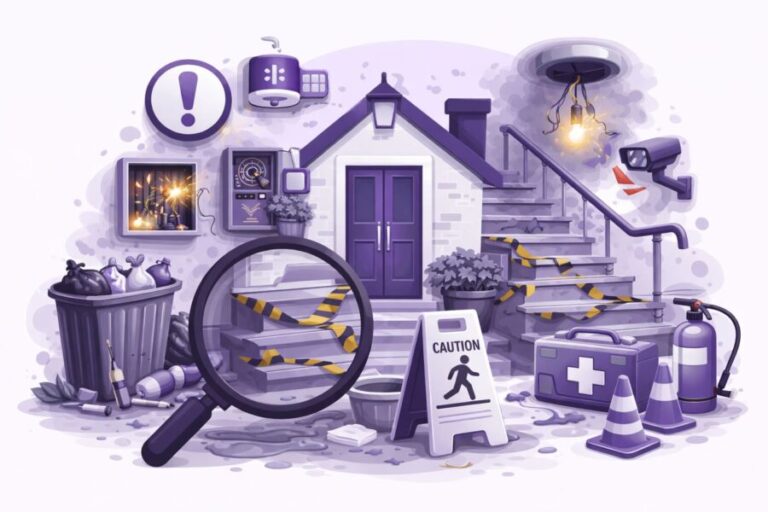
Maintaining communal area safety in Cardiff properties is essential for everyone living in the building. Shared spaces such as hallways, staircases and entrances must be kept clear, safe and accessible at all times.
This guide explains your responsibilities, what you should and shouldn’t store in communal areas, and how to keep the building safe.
Report hazards or safety concerns
Problems in communal areas are often caused by items being left in shared spaces or blocked access routes.
Even small obstructions can create serious safety risks, particularly in an emergency.
👉 Keeping shared areas clear helps protect you and others in the building.
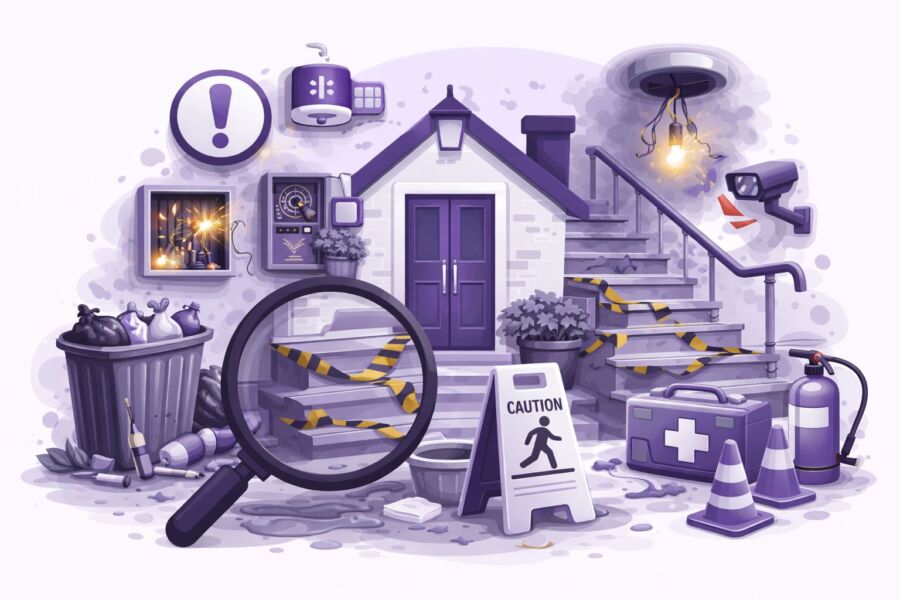
Is there something blocking a hallway, staircase or exit? Are items being stored in communal areas? These are the most common safety concerns.
Remove any personal items from shared areas and ensure access routes are clear at all times.
Most issues are caused by storage of bikes, rubbish, furniture or personal belongings in communal areas.
Report any hazards, blocked exits or items that cannot be safely removed.
Clutter such as bags, shoes, boxes or equipment can easily cause trips or injuries — especially on stairs or in shared entrances.
In an emergency, people may be moving quickly, and even small items can cause someone to fall, blocking others behind them.
👉 Key point: What seems harmless can become dangerous — always keep shared areas clear.
Leaving personal belongings in hallways or shared spaces isn’t just untidy — it can become dangerous very quickly.
For example, items like bikes (especially electric bikes) contain lithium batteries which can catch fire. If this happens in a hallway or stairwell, it can block the main escape route within seconds.
Even standard bikes and furniture can make evacuation difficult, especially in smoke or low visibility.
👉 Key point: Communal areas must never be used for storage — they are escape routes, not storage space.
Fire exits and escape routes must be kept completely clear at all times. In an emergency, people may only have seconds to leave the building.
Even something small — like a bag, bin or box — can slow someone down, cause a fall, or block the only way out. In smoke, visibility is low, and obstacles become much more dangerous.
👉 Key point: If it’s in the way, it’s a risk — escape routes must always be clear.
Leaving rubbish in communal areas is more than just unpleasant — it can become a fire risk and attract pests.
Waste, especially cardboard and plastics, can burn quickly and produce thick smoke. This can fill hallways and staircases, making escape difficult.
It can also attract pests such as rodents and insects, which then become a wider issue for the building.
👉 Key point: Rubbish should never be left in communal areas — it creates both fire and hygiene risks.
👉 Key point: Keeping communal areas clear is a legal safety requirement, not just guidance.
Communal areas form part of the building’s fire escape routes and must be kept completely clear at all times.
This means:
In the event of a fire, these areas must allow safe and quick evacuation for all residents.
The following items must not be left in shared spaces:
👉 Key point: Keeping communal areas clear is a legal safety requirement, not just guidance.
As a tenant, you are responsible for ensuring communal areas remain safe, clear and free from obstruction.
This includes not storing personal items in shared spaces and reporting any hazards you notice.
Failure to follow these rules may result in items being removed or further action being taken.
If you notice hazards or unsafe conditions in communal areas:
👉 Report the issue and we’ll take action.
Helpful resources for communal area safety, waste management and tenant responsibilities.
Learn how to manage rubbish, avoid complaints and deal with anti-social behaviour.
View GuidanceExplore all maintenance guides including plumbing, heating and property care.
View Help Hub